Sprycel
Sprycel
- Available from hospital and specialty oncology pharmacies and licensed distributors in Canada and worldwide; Sprycel (dasatinib) is legally prescription‑only (Rx) in major markets—while some pharmacies may dispense it without a receipt, purchasing or using it without a valid prescription is not recommended and may be against regulations.
- Sprycel is used to treat Philadelphia chromosome‑positive chronic myeloid leukemia (Ph+ CML) and Ph+ acute lymphoblastic leukemia (Ph+ ALL); it is a tyrosine kinase inhibitor that targets Bcr‑Abl and SRC family kinases to block cancer cell growth.
- Usual dosages: adults — CML newly diagnosed/ chronic phase 100 mg once daily; resistant/intolerant chronic phase 100 mg once daily (accelerated/blast phase 140 mg once daily); Ph+ ALL 140 mg once daily. Pediatric dosing typically 60 mg/m² once daily (maximum 100 mg); not established in children <1 year.
- Administered orally as film‑coated tablets (commonly available in 20, 50, 70, 80, 100 and 140 mg strengths).
- Onset: plasma concentrations peak in approximately 0.5–3 hours; biochemical kinase inhibition is rapid, while measurable clinical hematologic responses often appear within weeks (commonly 2–12 weeks) and deeper responses may take longer.
- Duration of action: the plasma half‑life is roughly 3–5 hours, but dasatinib is dosed once daily to maintain therapeutic kinase inhibition; treatment is frequently continued long‑term as maintenance until progression or unacceptable toxicity.
- Avoid excessive alcohol consumption—alcohol can worsen liver toxicity and tolerance; use caution in patients with hepatic impairment and avoid heavy drinking while on Sprycel.
- The most common side effect is myelosuppression (for example neutropenia); other frequent adverse effects include anemia, thrombocytopenia, edema/fluid retention, diarrhea, rash and fatigue.
- Would you like to try sprycel without a prescription?

Basic Sprycel Information
- INN (International Nonproprietary Name): Dasatinib.
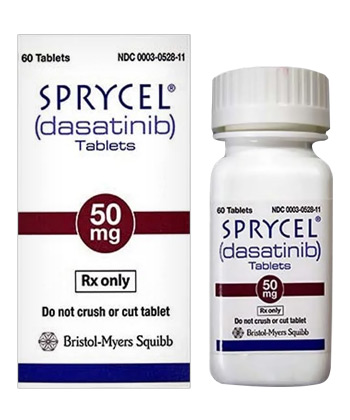
- Brand Names Available In Canada (English): Sprycel (originator brand by Bristol‑Myers Squibb) supplied as tablets in protective bottles with child‑resistant caps; common bottle sizes and strengths include 20 mg, 50 mg, 70 mg (bottles of 60) and 80 mg, 100 mg, 140 mg (bottles of 30 or 60).
- ATC Code: L01EA02 (antineoplastic agents; protein kinase inhibitors; dasatinib).
- Forms & Dosages: Oral tablets only; strengths 20 mg, 50 mg, 70 mg, 80 mg, 100 mg and 140 mg; no injectable or topical formulations are marketed.
- Manufacturers In Canada (English): Originator manufacturer is Bristol‑Myers Squibb; products are supplied through licensed distribution channels and hospital/specialty pharmacies.
- Registration Status In Canada (English): Not specified in the provided data; internationally approved by major regulators (FDA, EMA, PMDA) and listed on the WHO List of Essential Medicines since 2017.
- OTC / Rx Classification: Prescription Only (Rx).
Important Practical Instructions And Warnings
Keep Sprycel (dasatinib) in its original child‑resistant bottle at room temperature (20–25°C/68–77°F) and protected from moisture and light.
Do not share this medication with anyone and always carry your prescription details including the DIN and dosing information.
If travelling between provinces or to the United States, bring a recent pharmacy printout and your provincial drug card (for example Ontario Drug Benefit, BC PharmaCare, or RAMQ).
For any unexpected symptoms such as shortness of breath, significant bleeding, fainting or sudden dizziness, stop the medication and seek urgent care; inform your oncologist and local pharmacist immediately.
Everyday Use And Best Practices
Morning Vs Evening Dosing In Canadian Routines
Which time works best for you: morning or evening?
Take Sprycel (dasatinib) once daily as prescribed by your oncologist, with common adult doses of 100 mg or 140 mg once daily depending on the indication.
Matching the dosing time to your daily routine improves adherence and makes scheduling clinic blood work (CBCs, liver tests) more consistent.
Morning dosing with breakfast suits early risers and helps anchor the habit to an existing routine.
Evening dosing may be preferred by shift workers or patients whose mornings are unpredictable.
If you must change dosing time because of travel across time zones or clinic appointments, consult your oncologist or pharmacist before altering the schedule.
Use a daily medication checklist or a phone alarm to reduce missed doses and to sync with lab monitoring dates.
- Daily Dosing Checklist: current dose and strength, scheduled time, pharmacy contact, oncologist contact, DIN on file, pill reminder set.
- Travel Med Pack Contents: original bottle with label, paper prescription or clinic letter, recent pharmacy printout with DIN, provincial drug card, small pill case for daily use, contact numbers for oncology clinic and pharmacy.
Taking With Or Without Meals (Canadian Diet Context)
Should Sprycel be taken with food?
Follow your prescriber or pharmacist’s instructions about whether to take dasatinib with a light meal or on an empty stomach, and then keep that routine consistent.
Maintaining consistent meal timing helps reduce variability in symptoms and absorption.
Avoid very heavy, high‑fat meals and excessive alcohol around dosing because these can increase side effects such as fatigue or diarrhoea.
Keep a simple symptom diary for the first four to six weeks to report nausea, diarrhoea or sleepiness to your care team.
- One‑Page Food, Alcohol And Symptom Checklist: time of dose, what was eaten, alcohol intake that day, any diarrhoea, nausea, dizziness, or unusual fatigue reported.
Safety Priorities
Who Should Avoid It (Health Canada Advisories)
Is Sprycel safe for everyone?
Do not take dasatinib if you have a known hypersensitivity to dasatinib or any tablet excipients.
Caution is required for people with a history of QT interval prolongation, uncontrolled hypertension, active bleeding disorders or severe liver impairment.
If you are pregnant or breastfeeding, discuss risks carefully, because tyrosine kinase inhibitors are generally avoided in pregnancy and breastfeeding due to potential harm.
Before starting therapy, Health Canada‑style baseline assessments usually include a complete blood count (CBC), liver function tests (LFTs) and an ECG when clinically indicated.
Bring the following pre‑start checklist to your clinic:
- Recent ECG (if history of cardiac issues), recent CBC and LFTs within clinic timeframe, list of current medications (including OTCs and supplements), allergy history and pregnancy test when applicable.
Activities To Limit (Driving, Workplace Safety)
What should be avoided while starting Sprycel?
Until you know how Sprycel affects you, limit tasks that require full concentration such as heavy machinery operation or long‑distance driving.
If dizziness, syncope or severe fatigue occur, contact your provider before returning to those activities.
Because myelosuppression can increase bleeding risk, avoid contact sports and take care with sharp tools at work.
Carry emergency contact details and your oncology clinic phone number, and consider a medical alert card stating: "Dasatinib (Sprycel) — risk of bleeding, cytopenias."
- Safety Checklist: avoid heavy machinery until tolerance known, wear protective equipment at work, stop high‑risk sports if platelet counts are low, keep emergency contacts handy.
Dosage And Adjustments
General Regimen (DIN References)
What is the usual dose for adults?
Standard adult dosing for Ph+ CML in the chronic phase is typically 100 mg once daily.
Doses of 140 mg once daily are commonly used for accelerated phase, blast phase CML, and for Ph+ acute lymphoblastic leukaemia in adults.
Tablets are available in 20 mg, 50 mg, 70 mg, 80 mg, 100 mg and 140 mg strengths and are dispensed in child‑resistant bottles.
Your pharmacist will record the Drug Identification Number (DIN) on the label; keep the DIN and the brand name Sprycel (Bristol‑Myers Squibb) for refills, insurance claims and provincial coverage checks.
| Indication | Usual Adult Dose |
|---|---|
| Ph+ CML, Chronic Phase | 100 mg Once Daily |
| Ph+ CML, Accelerated/Blast Phase | 140 mg Once Daily |
| Ph+ ALL (Resistant/Intolerant) | 140 mg Once Daily |
Special Cases (Elderly, Comorbidities)
How are doses adjusted for special populations?
Elderly patients usually start on standard adult doses but need closer monitoring for myelosuppression and fluid retention.
Pediatric dosing is calculated by body surface area: 60 mg/m² once daily with a maximum of 100 mg for children aged one year and older.
Use caution in hepatic impairment; severe hepatic dysfunction may preclude use and specialist consultation is recommended for dosing decisions.
Renal impairment generally does not require dose adjustment since dasatinib is mainly excreted via feces, but electrolytes and renal function should be monitored.
| Patient Group | Adjustment / Note |
|---|---|
| Elderly | Standard dosing with closer monitoring for cytopenias and fluid retention |
| Pediatric (≥1 Year) | 60 mg/m² Once Daily (Max 100 mg) |
| Hepatic Impairment | Use With Caution; Not Recommended In Severe Dysfunction |
| Renal Impairment | No Routine Adjustment; Monitor Electrolytes |
User Testimonials
Positive Reports From Canadian Patients
What do real patients notice after starting Sprycel?
Many Canadian patients report improved blood counts and quality of life after switching to Sprycel when prior TKIs failed.
Common positive themes include return to work, fewer transfusions and clearer laboratory trends over months of therapy.
Patients in urban centres such as Toronto, Vancouver and Montreal often cite strong support from academic clinics.
Remote and rural patients frequently highlight the convenience of telehealth and local pharmacy coordination for lab results and refills.
- Common Positive Themes: improved lab monitoring, fewer transfusions, faster symptom control, strong clinic support in major cities.
Common Challenges In Forums (Reddit Canada, Health Boards)
What problems do patients discuss online?
Typical issues raised on forums include early gastrointestinal side effects like diarrhoea, persistent fatigue, and worries about access and cost.
Forum users often mention delays with provincial plan authorizations and the need to contact manufacturer patient assistance programs for help.
Adherence can dip during weekends or travel; patients have found pill timers and family reminders useful.
- Forum Tips Checklist: report symptoms early, contact provincial reimbursement offices, ask about manufacturer assistance, use pill timers for adherence.
Buying Guide
Pharmacy Sources (Shoppers, Rexall, Jean Coutu, London Drugs)
Where can Sprycel be dispensed in Canada?
Sprycel is prescription‑only and commonly dispensed through major chains (Shoppers Drug Mart, Rexall, Jean Coutu, London Drugs) and hospital specialty pharmacies.
Ensure your prescription clearly states Sprycel (dasatinib) and shows the DIN on the paperwork to speed processing and insurance claims.
Hospital specialty pharmacies often handle initial supplies and authorizations for high‑cost oncology drugs.
Quebec pharmacies will routinely provide bilingual (French/English) documentation when requested.
For rural patients, arrange courier delivery or provincial drug delivery services through your pharmacy.
- Pharmacy Steps: present prescription with indication, ask for DIN on receipt, enquire about provincial prior authorization, request delivery/courier if needed.
Price Comparison (In‑Store Vs Online, Cross‑Border Notes)
How much does Sprycel cost and where to buy?
Price varies by province and coverage; check provincial formularies such as Ontario Drug Benefit, BC PharmaCare and RAMQ and your private insurer for specific rules.
Manufacturer compassionate access or patient support programs can assist with initial or co‑pay costs for eligible patients.
Cross‑border purchasing is generally discouraged due to prescription and import rules and possible differences in formulations or packaging; rely on licensed Canadian pharmacies or hospital supply.
| Source | Notes |
|---|---|
| In‑Store/Hospital Pharmacy | Immediate dispensing, handles prior auths; DIN recorded for coverage |
| Manufacturer Assistance | May provide initial supplies or co‑pay support for eligible patients |
| Online/Courier Pharmacy | Useful for refills and rural delivery; ensure Canadian licensing and DIN documentation |
In our online pharmacy, sprycel is available without a prescription, with discreet delivery to Canada (English) in 5-14 days.
What’s Inside And How It Works
Ingredients Overview
What are the tablet strengths and packaging?
The active ingredient is dasatinib (INN) and the originator brand is Sprycel, by Bristol‑Myers Squibb.
Tablets come in strengths of 20 mg, 50 mg, 70 mg, 80 mg, 100 mg and 140 mg and are typically supplied in protective bottles with child‑resistant caps.
No injectable, solution or cream formulations are available for dasatinib.
- Tablet Strengths And Packaging: 20 mg, 50 mg, 70 mg (bottles of 60), 80/100/140 mg (bottles of 30 or 60); keep package insert for excipient/allergy checks.
Mechanism Basics
How does dasatinib stop cancer cells?
Dasatinib is a small‑molecule protein kinase inhibitor that targets BCR‑ABL and SRC family kinases to block malignant cell signalling and proliferation.
This mechanism explains why Sprycel can be effective when first‑line TKIs such as imatinib (Glivec/Gleevec) fail due to resistance or intolerance.
A simple one‑page infographic summarizing how dasatinib inhibits BCR‑ABL kinase and reduces leukemic cell growth is useful for clinic handouts.
Main Indications
Approved Uses In Canada
What conditions is Sprycel used for?
Sprycel (dasatinib) is indicated for Philadelphia chromosome‑positive (Ph+) chronic myeloid leukaemia (CML) and Ph+ acute lymphoblastic leukaemia (ALL).
Typical adult regimens are 100 mg once daily for chronic phase CML and 140 mg once daily for accelerated/blast phases and Ph+ ALL.
Pediatric dosing is BSA‑based at 60 mg/m² once daily for children aged one year and older, up to a maximum of 100 mg.
| Indication | Typical Adult Dose |
|---|---|
| Ph+ CML (Chronic Phase) | 100 mg QD |
| Ph+ CML (Accelerated/Blast) | 140 mg QD |
| Ph+ ALL | 140 mg QD |
Off‑Label Uses By Canadian Physicians
Are there off‑label uses?
Off‑label prescribing may occur in specialist centres for selected cases such as particular mutation profiles or clinical trial contexts, and requires informed consent.
Mutation testing and targeted sequencing are important to guide therapy choice; for example, some mutations may indicate other TKIs are preferred.
- Questions To Ask Before Off‑Label Use: what is the mutation profile, what are expected benefits, what monitoring will be done, and is there funding/support for the regimen?
Interaction Warnings
Food Interactions (Alcohol, Caffeine)
What foods or drinks should be limited?
Alcohol can worsen liver toxicity and increase fatigue; limit intake while on dasatinib and report new symptoms promptly.
Caffeine does not have a direct interaction but can increase jitteriness in patients experiencing anxiety or insomnia as side effects.
Keeping consistent meal timing relative to dosing reduces gastrointestinal variability.
- Food And Drink Checklist: avoid heavy fatty meals around dosing, limit alcohol, monitor caffeine if feeling jittery, keep meal timing consistent.
Drug Conflicts (Health Canada Database)
Which medicines interact with dasatinib?
Dasatinib has clinically significant interactions with strong CYP3A4 inhibitors and inducers, certain anticoagulants and other agents that affect cardiac conduction.
Avoid herbal supplements such as St. John’s wort which may reduce dasatinib levels, and tell your pharmacist about all prescription and OTC medicines before starting therapy.
| High‑Risk Drug Class | Examples / Action |
|---|---|
| CYP3A4 Inhibitors | Certain antifungals and macrolide antibiotics — interaction may increase dasatinib levels; pharmacist review required |
| CYP3A4 Inducers | Rifampin, St. John’s wort — may reduce efficacy |
| Anticoagulants / Antiplatelets | Increased bleeding risk; monitor platelet counts and bleeding signs |
Always bring a complete medication list to your appointments for a pharmacist‑verified interaction check.
Latest Evidence And Insights
Highlight Canadian And International Research
What do trials and registries show?
Evidence supports Sprycel’s role in first‑ and second‑line treatment for Ph+ CML and Ph+ ALL, and it has been on the WHO List of Essential Medicines since 2017.
Key trial endpoints frequently reported include molecular response rates, progression‑free survival and long‑term safety profiles such as myelosuppression and pleural effusions.
| Study | Population | Primary Outcome |
|---|---|---|
| Selected Randomized Trials | Adults With Ph+ CML | Molecular Response Rates And PFS Improvements In Certain Populations |
| Registry Data | Real‑World Canadian Centres | Tolerability, Long‑Term Survival And Monitoring Outcomes |
Practical Takeaways For Patients
What should patients focus on from the evidence?
Track measurable targets such as BCR‑ABL transcript levels and bring lab results to each oncology visit so treatment decisions are timely.
Ask whether dose reductions, treatment interruptions or participation in discontinuation trials are options when deep molecular responses are achieved.
- Research Snapshot For Clinic Handouts: common trial endpoints, monitoring frequencies, and potential long‑term side effects to watch for.
Alternative Choices
List Of Comparable Medicines With Pros/Cons Checklist
What other TKIs might be considered?
Alternatives include imatinib (Glivec/Gleevec), nilotinib (Tasigna), bosutinib (Bosulif) and ponatinib (Iclusig).
Each has a distinct profile: imatinib is well tolerated and cost‑effective but may be less active in resistant disease.
Nilotinib is potent but has metabolic and cardiac cautions.
Bosutinib can be an option for intolerance to other TKIs.
Ponatinib is reserved for resistant mutations such as T315I but carries a higher vascular risk and requires specialist oversight.
- Pros/Cons Checklist: activity against specific mutations, known cardiac/metabolic risks, prior TKI response, provincial coverage and cost.
Choosing Between Options (Clinical Factors)
How to decide on the best TKI?
Choice depends on mutation profile, prior therapies, comorbidities (particularly cardiac and hepatic), pregnancy plans and provincial formulary criteria.
Consult both oncologist and pharmacist and check provincial funding criteria before switching between TKIs.
- Decision Checklist: confirm mutation status, review prior TKI tolerance and response, list comorbidities, and check coverage/availability.
Regulation Snapshot
Health Canada Approval And DIN Requirements
How is Sprycel regulated in Canada?
Sprycel is prescription‑only and dispensed with a Drug Identification Number (DIN) on the label to support tracking and reimbursement.
Keep the DIN and manufacturer information (Bristol‑Myers Squibb) for specialty pharmacy coordination and insurance claims.
Pharmacies must follow storage and dispensing rules and insurers may require documentation of indication and prior therapies for coverage.
- Required Documents Checklist: prescription with indication, recent lab results, prior therapy history, and pharmacy printout with DIN.
Provincial Funding And Reimbursement
How to navigate provincial coverage?
Coverage varies across Ontario Drug Benefit, BC PharmaCare and RAMQ, each with prior authorization processes and documentation requirements.
Manufacturer patient support and compassionate access programs can bridge gaps while approvals are arranged.
| Province / Program | Typical Documentation |
|---|---|
| Ontario (ODB) | Prescription, prior therapy history, clinic letter |
| British Columbia (PharmaCare) | Prior authorization, recent labs, specialist note |
| Quebec (RAMQ) | Bilingual documentation, prescription and clinic records |
FAQ
Four Common Canadian Patient Questions
Can I drive after taking Sprycel?
Not until you know how it affects you; avoid driving if you experience dizziness, fainting or severe fatigue.
What if I miss a dose?
Take the next scheduled dose and do not double up or take extra doses on the same day.
Is there a generic Sprycel in Canada?
Branded Sprycel by Bristol‑Myers Squibb predominates; check with your pharmacist for local generic availability and the DIN for any alternative brands.
How long will I be on treatment?
Many patients remain on long‑term maintenance therapy; discuss molecular response targets and duration with your oncologist.
Where To Get Immediate Help
Who to contact in an emergency?
For urgent adverse events such as severe bleeding or breathlessness, go to the nearest emergency department and bring your medication list and pharmacy printout.
For prescription, coverage or access questions contact your oncology clinic, provincial drug plan office, or local pharmacy; manufacturer patient support lines may assist with access concerns.
- Quick‑Reference Contact Checklist: oncology clinic phone, pharmacy phone, provincial drug plan contact, manufacturer assistance number, emergency contact.
Guidelines For Proper Use
Canadian Pharmacist And Provincial Health Authority Recommendations
What monitoring is required on Sprycel?
Baseline and periodic monitoring generally includes CBCs, LFTs, electrolytes and ECGs when clinically indicated for QT risk.
Report bleeding, shortness of breath or significant swelling immediately to the oncology team.
Pharmacists should perform interaction checks at every refill and conduct a medication review at initiation and annually.
- Monitoring Schedule Checklist: baseline CBC/LFT/ECG as indicated, CBC every 1–2 weeks when starting or changing dose, periodic LFTs and electrolytes per clinic guidance.
Practical Steps For Adherence And Documentation
How to stay on track and keep records?
Use a daily pillbox, phone alarms and a symptom diary for the first two to three months to capture early side effects and adherence patterns.
Keep copies of lab results, prescriptions and prior TKI records for insurance and specialist referrals.
When travelling, pack medication in carry‑on luggage, carry a clinic letter and verify refill access if abroad.
- Adherence And Travel Checklist: pillbox, medication label with DIN, clinic letter for travel, provincial drug card, symptom diary, pharmacy contact for emergency refills.
Delivery Across Canada (English)
| City | Region | Delivery time |
|---|---|---|
| Toronto | Ontario | 5-7 days |
| Vancouver | British Columbia | 5-7 days |
| Montreal | Quebec | 5-7 days |
| Calgary | Alberta | 5-7 days |
| Edmonton | Alberta | 5-7 days |
| Ottawa | Ontario | 5-7 days |
| Winnipeg | Manitoba | 5-7 days |
| Halifax | Nova Scotia | 5-9 days |
| Regina | Saskatchewan | 5-9 days |
| Charlottetown | Prince Edward Island | 5-9 days |
| St. John’s | Newfoundland and Labrador | 5-9 days |
| Greater Sudbury | Ontario | 5-9 days |
| Whitehorse | Yukon | 5-9 days |
| Yellowknife | Northwest Territories | 5-9 days |