Minoxidil
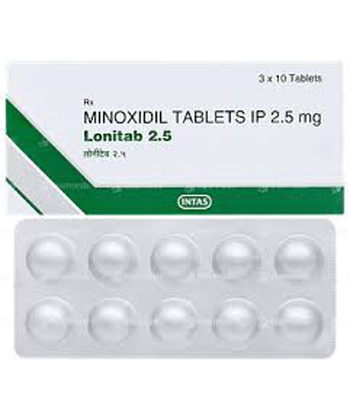
Minoxidil
- In Canada, minoxidil can be purchased over the counter without a prescription at pharmacies, drugstores, and many online retailers. Oral minoxidil is prescription-only.
- Minoxidil is used for androgenetic alopecia (pattern hair loss) and, in oral form, for severe hypertension. It works by dilating blood vessels and, when used on the scalp, helps prolong the hair growth phase and increase blood flow to hair follicles.
- The usual dose for hair loss is 1 mL of 2% or 5% topical solution/foam applied to the scalp 1–2 times daily; men commonly use 5%, and women often use 2% or 5% as directed. Oral doses for hypertension are typically 2.5–10 mg daily, prescribed by a clinician.
- The form of administration is topical solution, foam, lotion, or gel for hair loss; oral tablets are used for hypertension.
- Minoxidil usually starts to show initial results in about 2–4 months, with some people noticing reduced shedding earlier and visible regrowth developing gradually.
- The duration of action is short per application, so it must be used continuously to maintain results; hair growth benefits are maintained only with ongoing use, and maximum effect is often seen around 12 months.
- There is no specific alcohol interaction for topical minoxidil, but alcohol may worsen dizziness or low blood pressure with oral minoxidil. Avoid excess alcohol if you use the oral form.
- The most common side effects are scalp irritation, itching, dryness, flaking, and temporary increased hair shedding at the beginning of treatment. Unwanted facial or body hair growth can also occur.
- Would you like to try minoxidil without a prescription?
Basic Minoxidil Information
- INN (International Nonproprietary Name): Minoxidil
- Brand names available in Canada (English): Rogaine
- ATC Code: D11AX01
- Forms & dosages: Topical solution/foam 2%, 3%, 5%, 7.5%; oral tablets 2.5 mg, 5 mg, 10 mg; topical gel/lotion 5%, 10%
- Manufacturers in Canada (English): Upjohn (Pfizer/Kenvue for Rogaine), Perrigo, Apotex, Hikma, Teva, Watson Labs, Bausch & Lomb
- Registration status in Canada (English): Widely registered as a topical solution or foam for hair loss; oral minoxidil is Rx only
- OTC / Rx classification: US, Canada topical minoxidil OTC (2%, 5%); oral minoxidil Rx only
Everyday Use And Best Practices
Morning Vs Evening Dosing In Canadian Routines
Wondering how minoxidil fits into a busy Canadian day?
For many people, the easiest routine is after a shower, once the scalp is fully dry, before work or before bed.
Topical minoxidil is applied to the scalp, not taken with meals, and oral minoxidil is prescription-only in Canada.
Rogaine Canada products commonly come as 2% or 5% solution or foam, often in 60 mL bottles or 60 g cans, so the daily routine stays simple.
In winter, dry indoor air and tuques can make the scalp feel tighter, so a gentle, fully dry application matters even more.
If pillow transfer is a concern, avoid putting it on right before sleep and give it time to dry first.
Pharmacy counselling at Shoppers Drug Mart, Rexall, Jean Coutu, and London Drugs often helps with bilingual labelling and product selection.
- Wash and dry the scalp completely.
- Apply the directed amount of minoxidil topical solution or minoxidil foam.
- Let it dry before hats, tuques, or styling.
- Wash hands after use.
- Use it consistently for your hair loss treatment plan.
Taking With Or Without Meals
Meal timing is usually not part of topical use, because topical minoxidil is for the scalp rather than the stomach.
That makes it practical for coffee-before-commuting mornings, lunch breaks, or a quiet evening routine at home.
If a bottle is shared in the bathroom, keep it away from damp counters and steam from showers.
For people who prefer a foam, the faster-drying feel can be easier in a Canadian routine with work, school runs, and winter layers.
Safety Priorities
Who Should Avoid It
Minoxidil is generally well tolerated, but patients still need Health Canada-style caution when warning signs appear.
Topical minoxidil may cause scalp irritation, early shedding, or unwanted facial or body hair.
Oral minoxidil is Rx-only and is used for hypertension, not for routine hair loss self-treatment.
These red flags deserve attention right away:
- Pregnancy or breastfeeding.
- Scalp psoriasis or severe eczema with topical use.
- Heart disease, arrhythmia, angina, or a history of fainting.
- Kidney or liver problems.
- Children.
- Dizziness, palpitations, swelling, or faintness, especially with oral therapy.
Activities To Limit
Driving and workplace safety matter if dizziness or palpitations show up.
That is especially important when oral minoxidil is being used off-label by a physician and monitoring is in place.
If symptoms affect balance, focus, or stamina, it is better to pause and seek medical advice than to push through a shift.
Scalp irritation from topical minoxidil side effects may also be more bothersome under a hard hat or helmet.
Dosage And Adjustments
General Regimen
People often ask whether 2% or 5% is the right starting point.
In practice, minoxidil 5% is commonly used for men, while minoxidil 2% is often used for women, depending on the product directions.
Topical forms sold in Canada may carry a DIN, and the regimen is usually once or twice daily to the scalp as directed on the box.
Results are gradual, with improvement often beginning in 2 to 4 months and the maximum effect around 12 months.
Continuous use is needed to maintain gains.
| Form | Typical Strength | Usual Frequency | Notes |
|---|---|---|---|
| Topical solution | 2%, 5% | Once or twice daily | Apply to scalp only |
| Topical foam | 2%, 5% | Once or twice daily | Often preferred for quicker drying |
| Oral tablets | 2.5 mg, 5 mg, 10 mg | Per prescription | For hypertension; hair loss use is off-label |
Special Cases
Older adults should use caution, especially if blood pressure, renal function, or heart rhythm is an issue.
Children are not recommended for hair loss treatment with minoxidil.
People with cardiovascular, renal, or hepatic problems need extra monitoring, and oral minoxidil tablets require physician oversight.
If the routine needs adjusting, the safest approach is to confirm the product label, then ask a pharmacist before changing frequency or strength.
User Testimonials
Positive Reports From Canadian Patients
Canadian patients often say the biggest benefit is access.
They like being able to pick up Rogaine or a generic at a pharmacy and build a simple routine around it.
Many describe gradual hair regrowth at the hairline or crown after months of steady use.
Bilingual packaging also helps reduce confusion in Quebec and bilingual households.
Common Challenges In Forums
On Reddit Canada and other health boards, the same concerns come up again and again.
- Initial shedding before improvement.
- A greasy feel with solution.
- Foam cost compared with liquid formats.
- Needing patience for several months.
Those anecdotes matter because they reflect real adherence problems, but they do not replace evidence, and response varies from person to person.
Buying Guide
Pharmacy Sources
Canadians usually buy minoxidil at in-store pharmacies, pharmacy websites, or sometimes through hair clinics.
Shoppers Drug Mart, Rexall, Jean Coutu, and London Drugs are common places to compare brands, strengths, and formats.
Our online pharmacy offers minoxidil without a prescription, with discreet delivery to Canada in 5 to 14 days.
Generic minoxidil is often cheaper than Rogaine Canada, and foam may cost more than solution depending on the pack size.
Price Comparison
| Source | Format | Typical Considerations |
|---|---|---|
| Shoppers Drug Mart | Solution, foam | Easy pharmacy counselling and in-store pickup |
| Rexall | Solution, foam | Brand and generic comparison |
| Jean Coutu | Solution, foam | Bilingual labelling support |
| London Drugs | Solution, foam | Convenient west-coast access |
Cross-border US prices can look tempting, but import rules, returns, and label differences matter.
Provincial coverage is usually limited for cosmetic hair-loss treatment, so Ontario Drug Benefit, BC PharmaCare, and RAMQ should not be assumed to cover it routinely.
Before ordering online, verify the DIN, seal, expiry date, and seller legitimacy.
What’s Inside And How It Works
Ingredients Overview
Minoxidil is the active ingredient.
Topical products may also contain solvents, propellants, or foam bases, depending on whether the product is a solution, lotion, or minoxidil foam.
Market strengths commonly include 2%, 3%, 5%, and 7.5% for topical use.
The ATC code is D11AX01.
Mechanism Basics
Minoxidil helps prolong the growth phase of hair follicles and may improve scalp blood flow, which can support hair regrowth in androgenetic alopecia.
It works best when used consistently and earlier in hair loss rather than after long-standing thinning.
That is why a topical solution or foam often performs better as a maintenance treatment than as a quick fix.
Main Indications
Approved Uses In Canada
Topical minoxidil is used for androgenetic alopecia in men and women and is widely available in Canada as an over-the-counter hair loss treatment with appropriate labelling and DIN.
Oral minoxidil is approved for severe hypertension and is not the routine self-care form for hair loss.
Pattern thinning and sudden patchy shedding are not the same problem, and sudden loss always deserves medical assessment.
Off-Label Uses By Canadian Physicians
Some Canadian physicians do prescribe oral minoxidil off-label for selected hair loss cases.
That approach is more closely monitored because of blood pressure and heart-related risks.
Minoxidil for hair loss remains the more familiar discussion in pharmacies, while oral therapy stays in the prescriber’s lane.
| Use | Status | Key Point |
|---|---|---|
| Androgenetic alopecia | Approved topical use | Common self-care option |
| Severe hypertension | Approved oral use | Prescription-only |
| Hair loss with oral tablets | Off-label | Physician supervision needed |
Interaction Warnings
Food Interactions
For topical minoxidil, food interactions are usually not the issue.
For oral minoxidil, alcohol may worsen dizziness or low blood pressure, and caffeine can make palpitations feel more noticeable in sensitive users.
Drug Conflicts
Oral minoxidil can interact with blood pressure medicines, other vasodilators, and some heart medications.
If a patient already takes treatment for hypertension, a pharmacist should review the full list before any change is made.
A good habit is to check the Health Canada drug product database or ask a pharmacist if the product is safe with the current medication list.
- What prescription medicines are you taking?
- Do you already have low blood pressure or palpitations?
- Are you using alcohol regularly?
- Have you noticed dizziness after starting any new medicine?
Latest Evidence And Insights
Canadian And International Research Snapshot
Minoxidil remains a first-line option for androgenetic alopecia, and that position is supported by decades of use and ongoing research.
It is widely available in Canada, the US, and EU markets, with global generics and branded products continuing to circulate.
There are also 62 registered clinical trials and a long history of topical production worldwide.
Oral minoxidil for hair loss is an emerging off-label option with growing research, but it is not the standard self-care choice.
What Evidence Means For Day-To-Day Use
For most patients, consistency matters more than strength escalation.
Using it more often is not always better, and switching products too quickly can make it hard to judge response.
A simple table helps frame the difference between topical and oral use.
| Type | Evidence Base | Monitoring Need |
|---|---|---|
| Topical minoxidil | Long-standing, broad evidence | Mostly local scalp monitoring |
| Oral minoxidil | Growing off-label evidence | Blood pressure and symptom monitoring |
Alternative Choices
Comparable Medicines And Products
People comparing minoxidil with a Rogaine alternative usually hear about finasteride, dutasteride, spironolactone, or alfatradiol.
These are not direct swaps.
Finasteride and dutasteride are prescription therapies with different risk profiles, while spironolactone is often used off-label in women.
Pros And Cons Checklist
- Pros of minoxidil: OTC access, familiar product range, and easy daily use.
- Cons of minoxidil: slow results, scalp irritation, and the need for ongoing use.
- Pros of prescription options: different mechanisms that may help selected patients.
- Cons of prescription options: more monitoring, pregnancy considerations, and possible sexual side effects with some drugs.
The best minoxidil brand is usually the one the patient can afford and use consistently.
Regulation Snapshot
Health Canada Approval And DIN Requirements
Topical minoxidil products sold in Canada should carry a DIN and meet Health Canada requirements.
Oral minoxidil stays prescription-only and is not the usual OTC hair-loss choice.
Bilingual labelling and Canadian packaging standards help patients compare products safely, especially when buying at pharmacies or online.
Provincial Coverage And Pharmacy Rules
Availability can differ by province and chain pharmacy policy.
Coverage rules in Quebec, Ontario, and BC may differ for unrelated indications, so it is wise to verify before assuming reimbursement.
Before purchase, check the DIN, expiry date, and pharmacy source.
| Type | Access | What To Verify |
|---|---|---|
| Topical minoxidil | OTC | DIN, seal, expiry |
| Oral minoxidil | Prescription only | Prescriber direction and monitoring |
Frequently Asked Questions
Does Minoxidil Work For Every Type Of Hair Loss?
No, it is mainly used for androgenetic alopecia, not every form of hair loss.
How Long Should I Use It Before Stopping?
Give it months, not days, and stopping usually means losing gains over time.
Can I Use It With Coloured Or Treated Hair?
Yes, styling products and coloured hair can usually coexist with topical use, as long as the scalp is dry first.
What If I Miss A Dose?
Use the next dose as soon as remembered, skip it if the next one is close, and do not double up.
That simple rule keeps the routine steady and lowers the chance of irritation or misuse.
Guidelines For Proper Use
Canadian Pharmacist And Provincial Health Authority Recommendations
Apply minoxidil to a dry scalp, wash hands after use, and avoid over-application.
Keep it away from eyes and broken skin.
For topical solution, remember that the product is flammable, so it should stay away from flames and heat sources.
Store it at room temperature, between 15 and 30 degrees Celsius, and protect it from moisture and light.
Storage, Transport, And When To Seek Help
If a dose is missed, take the next dose as directed and never double the amount.
If topical product gets on a large irritated area, wash it off with water and ask a pharmacist for advice.
With oral minoxidil, severe hypotension, tachycardia, chest pain, faintness, or swelling need urgent medical attention.
Rural patients may rely more on online or mail-order pharmacy options, while urban patients often compare in-store chains more easily.
Delivery Across Canada (English)
| City | Region | Delivery time |
|---|---|---|
| Toronto | Ontario | 5-7 days |
| Ottawa | Ontario | 5-7 days |
| Mississauga | Ontario | 5-7 days |
| Hamilton | Ontario | 5-7 days |
| Montreal | Quebec | 5-7 days |
| Quebec City | Quebec | 5-7 days |
| Calgary | Alberta | 5-7 days |
| Edmonton | Alberta | 5-7 days |
| Vancouver | British Columbia | 5-7 days |
| Surrey | British Columbia | 5-7 days |
| Winnipeg | Manitoba | 5-7 days |
| Halifax | Nova Scotia | 5-7 days |
| Saskatoon | Saskatchewan | 5-9 days |
| St. John’s | Newfoundland and Labrador | 5-9 days |
Minoxidil Canada buying tip: whether the choice is Rogaine 5% foam, a minoxidil solution, or another hair regrowth treatment, the safest plan is the one that matches the label, the scalp condition, and the patient’s daily routine.