
Permethrin
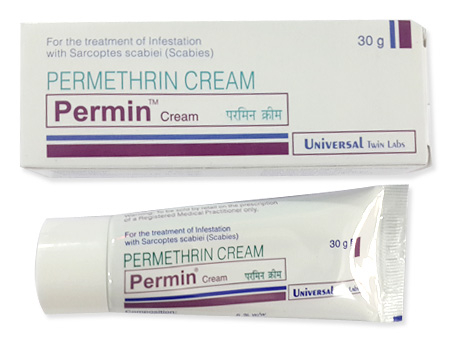
Permethrin
- In Canada you can buy many permethrin products in pharmacies without a prescription — 1% lice formulations are commonly sold over‑the‑counter (OTC) and available online or in store; 5% scabies cream often requires a prescription in many jurisdictions, though availability can vary by retailer.
- Permethrin is used to treat scabies and head lice; it is a synthetic pyrethroid that disrupts parasite neuronal sodium channels, causing paralysis and death of the mites or lice.
- Usual dosing: for scabies adults and children ≥12 years apply a full tube of 5% cream from head to toe and leave 8–14 hours (repeat in 7 days if needed); children dosing is reduced (about ½ tube for 6–12 yrs, ¼ tube for 1–5 yrs, 1/8 tube for 2 mo–1 yr); for head lice use 1% lotion or cream rinse, saturate washed hair, leave ~10 minutes then rinse, repeat after 7 days if live lice persist.
- Form of administration: topical only — cream (5%), lotion (1%), spray (0.25%–0.5%) and combined lice treatment kits.
- Onset time: permethrin begins to kill mites and lice within minutes to hours after application; clinical symptom relief (itching) may take several days.
- Duration of action: a single scabies treatment has residual effect for several days (treatment protocol often allows one application with a possible repeat at 7 days); lice treatments may provide residual activity up to about 7 days, which is why a repeat treatment after one week is recommended if needed.
- Alcohol warning: there is no systemic interaction requiring alcohol avoidance with oral consumption, but avoid applying alcohol‑based products to treated skin or wetting treated areas with alcohol; if skin irritation occurs, avoid alcohol-containing topical products until the skin recovers.
- The most common side effec is local skin irritation — burning, stinging, itching or mild redness at the application site (numbness, tingling, headache or dizziness are less common).
- Would you like to try permethrin without a prescription?
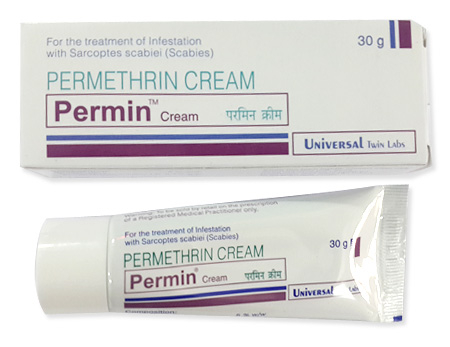
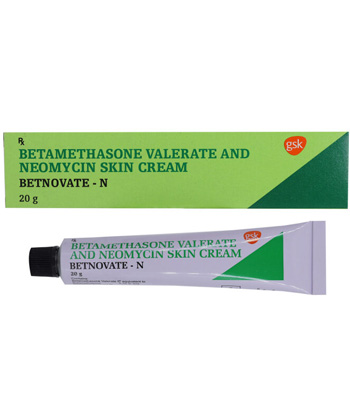
Basic Permethrin Information
- INN (International Nonproprietary Name): Permethrin
- Brand Names Available In Canada (English): Nix (cream rinse 1%, lice kit) — other global brands include Acticin, Lyclear, Elimite; availability and exact packaging vary by supplier.
- ATC Code: P03AC04 — Ectoparasiticides (pyrethrins, pyrethroids), permethrin.
- Forms & Dosages: Cream 5% for scabies; Lotion/Cream Rinse 1% for head lice; Sprays 0.25% and 0.5% for environmental use; combination kits for lice treatment.
- Manufacturers In Canada (English): Nix is marketed in Canada; major global suppliers include Reckitt (Nix) and manufacturers supplying 1% and 5% products internationally.
- Registration Status In Canada (English): Permethrin products are used for scabies and lice internationally; formulation-specific availability and Rx/OTC status vary by product — check the product monograph and label for Canadian registration details.
- OTC / Rx Classification: Most 1% lice formulations are OTC; 5% cream for scabies is prescription in many jurisdictions and may require a prescriber in Canada depending on the product.
Initial Instructions, Warnings And Daily-Life Integration For Canadian Patients
Read the product label and follow Health Canada or your provincial pharmacy advice before using permethrin.
Permethrin 5% cream is typically prescription-only for scabies while 1% lotions, cream rinses or kits for head lice are commonly sold over the counter in Canada.
Avoid use in infants younger than two months because safety has not been established in neonates.
Known hypersensitivity to permethrin or other synthetic pyrethroids is an absolute contraindication.
Store products at 20–25°C (68–77°F), protect from light and moisture, and keep out of reach of children.
If you live in a rural or remote area, call your local pharmacy such as Shoppers Drug Mart, Rexall, Jean Coutu or London Drugs to check stock or request delivery.
Bilingual labelling is common in Canada, and cross-border shopping for products such as Nix is possible but check Drug Identification Number (DIN) and provincial drug plan coverage before purchasing.
Everyday Use & Best Practices
Morning Vs Evening Dosing In Canadian Routines
What time of day should I plan treatment so it fits family life and work?
For scabies, apply a 5% cream from head to toe and leave it on for 8–14 hours, so applying in the evening before bed is convenient and reduces the chance of accidental washing.
For head lice, 1% lotions or a 1% cream rinse work well when used on washed, towel-dried hair and a short dwell time is required, making a morning grooming routine convenient.
If a parent calls on a Friday evening asking for a quick plan, advise evening scabies application and laundering the next morning to avoid cross-contamination.
Taking With Or Without Meals (Canadian Diet Context)
There are no food interactions with topical permethrin, so meal schedules do not affect efficacy.
Shift workers, people with diabetes or anyone with a busy eating schedule can apply topical treatment without changing meals.
If scabies cream is left on overnight, plan clothing and bedding changes and laundry immediately after treatment to reduce re-exposure.
Use the short bedtime checklist below to make evening application easier.
- Bedtime Routine Checklist For Scabies: Apply before bed, sleep through the treatment period, shower or wash off in the morning, change to clean clothes and launder bedding.
- Lice Treatment Steps (Quick): Wash and towel-dry hair, apply 1% cream rinse or lotion to saturate hair, leave for about 10 minutes, rinse and comb with a fine-tooth nit comb; repeat at day 7 if live lice are seen.
Safety Priorities
Who Should Avoid It (Health Canada Advisories)
Who must not use permethrin?
Do not use permethrin if you have a known hypersensitivity to permethrin, synthetic pyrethroids or any excipient listed on the label.
Avoid use in neonates under two months of age because safety has not been established for that age group.
Use caution on severely inflamed or weeping skin and consult a clinician before treating those areas.
Elderly patients with thin or fragile skin should have supervised application and monitoring for irritation.
Pregnant or breastfeeding patients should discuss use with their prescriber, noting that topical absorption is minimal but local guidance should be followed.
Activities To Limit (Driving, Workplace Safety)
Are there restrictions on driving or operating machinery after applying topical permethrin?
Once the cream or lotion is absorbed and dry, there are no routine driving or heavy-machinery restrictions.
If a patient experiences CNS symptoms such as dizziness or marked headache after application, they should avoid driving and seek medical advice.
Healthcare workers should wear gloves when applying to patients and let the product dry before resuming duties.
- Stop And Call Symptoms: Severe rash, swelling, breathing difficulty, fainting, prolonged dizziness, or signs of systemic toxicity after accidental ingestion.
- Populations At Risk: Neonates under two months, those with known pyrethroid allergy, people with extensive weeping dermatitis, and frail elderly with very thin skin.
Dosage & Adjustments
General Regimen (DIN References)
What is the standard dosing for scabies and head lice in Canada?
For scabies, the standard approach uses a 5% cream applied head-to-toe, typically a full tube (30 g or 60 g depending on product) and left on for 8–14 hours.
For head lice, 1% lotion or cream rinse products are applied to washed, towel-dried hair, saturated thoroughly, left for about 10 minutes and then rinsed.
Repeat lice treatment at day 7 if live lice are seen.
Check the product for a Health Canada Drug Identification Number (DIN) to confirm Canadian approval and follow the product monograph.
Special Cases (Elderly, Comorbidities)
Systemic dose adjustments for renal or hepatic impairment are not required because topical absorption is minimal.
Elderly patients may need smaller quantities for thin or fragile skin and should be observed for irritation.
Follow the age-based tube fraction guidance below for children.
| Age Group | Typical Fraction Of A Tube (5% Cream) |
|---|---|
| Adults / 12+ Years | Full tube (30 g or 60 g depending on product) |
| Children 6–12 Years | Up To ½ Tube |
| Children 1–5 Years | Up To ¼ Tube |
| Infants 2 Months–1 Year | Up To 1/8 Tube |
| Neonates <2 Months | Not Recommended / Safety Not Established |
User Testimonials
Positive Reports From Canadian Patients
Can users expect fast symptom relief?
Many Canadians report itch reduction within 24–72 hours after correct application of 5% scabies cream when applied head-to-toe as instructed.
Lice users frequently praise Nix 1% kits and cream rinse products for ease of use and short application times.
Urban customers often mention same-day pickup from Shoppers Drug Mart or Rexall, while rural patients note courier delivery from community pharmacies as very helpful.
Patients in Quebec and New Brunswick often appreciate bilingual instructions that come with some products.
Common Challenges In Forums (Reddit Canada, Health Boards)
What problems do people commonly report online?
Recurring themes include difficulty removing eggs (nits) without diligent combing and confusion over timing for repeat doses.
Stock shortages during local outbreaks and uncertainty about which product strength to use are common concerns.
Misinformation about mixing formulations or “washing off too soon” circulates — always follow the product label and local health advice.
- Real-World Tips: Use a fine-tooth nit comb after treatment, separate shared bedding during treatment, and confirm repeat-dosing timing.
- Common Pitfalls: Skipping combing, using veterinary permethrin on people, and treating infants under two months.
Buying Guide
Pharmacy Sources (Shoppers, Rexall, Jean Coutu, London Drugs)
Where can Canadians buy permethrin products?
OTC 1% lice products such as Nix cream rinse are widely stocked at Shoppers Drug Mart, Rexall, London Drugs and Jean Coutu in Quebec, but availability of 5% scabies cream may require a prescription and pharmacy ordering.
Look for a Health Canada DIN and bilingual labelling on the package to confirm approved Canadian products.
Rural pharmacies will often order or mail products if not physically in stock.
Price Comparison (In-Store Vs Online, Cross-Border Notes)
Expect price variation between in-store and online retailers; OTC kits are often cheaper at big-box stores or online marketplaces.
Prescription 5% creams may be listed on provincial formularies in certain circumstances, so check Ontario Drug Benefit, BC PharmaCare or RAMQ for coverage details.
Cross-border purchases from the U.S. for brands such as Nix can be tempting, but ensure equivalence, DIN status and consider duties or return restrictions.
| Source | What To Expect |
|---|---|
| Local Pharmacy (Shoppers, Rexall) | Immediate advice, possible same-day pickup, can check DIN and stock |
| Online Canadian Retailer | Lower prices on OTC kits, discreet delivery options |
| Cross-Border U.S. Sites | Possible price savings but check equivalence, DIN and import rules |
In our online pharmacy, permethrin is available without a prescription, with discreet delivery to Canada (English) in 5–14 days.
- Before You Buy Checklist: Confirm DIN, concentration (1% vs 5%), expiry date, and that the product is intended for human use.
What’s Inside & How It Works
Ingredients Overview
What are the active and inactive components?
The active ingredient in human topical products is permethrin, a synthetic pyrethroid.
Common formulations include 5% cream for scabies and 1% lotion or cream rinse for head lice.
Environmental sprays are available at 0.25% and 0.5% concentrations for use on bedding and furniture but are not for direct skin use.
Check excipient lists on packaging for potential allergens, and never use veterinary permethrin formulations on people because concentrations and excipients differ.
Mechanism Basics
How does permethrin kill parasites?
Permethrin acts on parasite nerve membranes and disrupts sodium channels, causing paralysis and death of mites or lice.
Topical application per label results in minimal systemic absorption in humans.
Environmental sprays act on insects on surfaces and are not a substitute for personal treatment.
| Formulation | Strength | Intended Use |
|---|---|---|
| Cream | 5% | Scabies, head-to-toe application |
| Lotion / Cream Rinse | 1% | Head lice, hair application |
| Spray | 0.25%–0.5% | Environmental use on bedding/furniture (not for skin) |
Main Indications
Approved Uses In Canada
What are the usual approved indications?
Permethrin is approved internationally for scabies using 5% cream and for head lice using 1% lotions or cream rinses.
In Canada, exact Rx or OTC classification and brand availability vary by product and require checking the product monograph and label.
For scabies, apply 5% cream from head to toe and leave it for 8–14 hours.
For head lice, use 1% formulations to saturate hair, leave for about 10 minutes and rinse; repeat at day 7 if live lice are seen.
Off-Label Uses By Canadian Physicians
Some clinicians may recommend permethrin-related measures for household contacts or as part of environmental control guidance.
Environmental sprays exist for belongings and furniture, but these sprays are not for human skin application.
| Indication | Formulation | Typical Dwell Time |
|---|---|---|
| Scabies | 5% Cream | 8–14 Hours |
| Head Lice | 1% Lotion / Cream Rinse | ≈10 Minutes; Repeat At Day 7 If Needed |
| Environmental Control | Spray 0.25%–0.5% | Surface Application; Not For Skin |
Interaction Warnings
Food Interactions (Alcohol, Caffeine)
Are there any food or drink interactions to worry about?
There are no clinically relevant food interactions with topical permethrin, so alcohol or caffeine consumption does not alter topical effectiveness.
Patients can eat and drink normally during topical treatment.
Drug Conflicts (Health Canada Database)
Systemic drug interactions are unlikely because systemic absorption of topical permethrin is minimal.
Check with Health Canada or provincial drug interaction tools if a patient is using multiple topical agents or has significant skin barrier disruption.
Avoid concurrent use with other potentially irritating topical therapies unless a prescriber advises it.
- Pharmacist Checklist: Ask about other topicals, known allergies to pyrethroids, pregnancy or breastfeeding, and any severe skin breakdown before recommending permethrin.
Latest Evidence & Insights
What does current evidence say about permethrin efficacy and resistance?
Randomized controlled trials and product monographs support good efficacy for 5% cream in scabies when applied correctly.
For head lice, permethrin 1% products are effective in many settings but regional resistance has been reported, and some communities report reduced sensitivity.
When local resistance is suspected after correct application and repeat dosing, clinicians commonly move to alternative agents such as malathion or oral ivermectin for scabies in appropriate cases.
| Study/Region | Main Finding | Resistance Notes |
|---|---|---|
| Various RCTs (International) | High cure rates for scabies with 5% cream when used correctly | Generally effective; follow-up needed for household control |
| Head Lice Surveillance (Regional) | Variable effectiveness of 1% permethrin in some regions | Reports of reduced sensitivity and treatment failures in pockets |
Practice implications include confirming correct application, using combing for nits, repeating lice treatment at day 7, and considering alternative agents if failure persists.
Alternative Choices
What are the alternatives if permethrin is unsuitable or fails?
Alternatives include malathion (prescription in some areas for lice), crotamiton, benzyl benzoate, and oral ivermectin for scabies under prescriber guidance.
Lindane exists historically as a competitor but has greater toxicity concerns and is not usually a first-line option.
- Malathion: Often effective for permethrin-resistant lice; prescription status varies and it may be more irritating to skin.
- Crotamiton / Benzyl Benzoate: Used in some settings for scabies; suitability varies by age and skin condition.
- Oral Ivermectin: Prescriber-only option for scabies in certain scenarios, especially when topical therapy is impractical.
| Patient Scenario | Preferred Alternative |
|---|---|
| Permethrin Treatment Failure (Suspected Resistance) | Consider Malathion (lice) or Oral Ivermectin / Alternative Scabicides (scabies) Under Prescriber Guidance |
| Allergy To Pyrethroids | Use Non-Pyrethroid Options Such As Benzyl Benzoate Or Crotamiton; Consult Prescriber |
| Pregnancy Or Breastfeeding | Discuss With Prescriber; Topical Use May Be Considered With Caution |
Regulation Snapshot
How is permethrin regulated in Canada?
Health Canada regulates topical permethrin products and approved products will carry a Drug Identification Number (DIN) on the label.
In general, 1% formulations for lice are commonly OTC while 5% creams for scabies are often prescription-only depending on the product monograph.
Provincial drug plans such as Ontario Drug Benefit, BC PharmaCare and RAMQ may list specific products or require special authorization for coverage.
- Package Checklist: Look For DIN, Concentration (1% Vs 5%), Bilingual Labelling, Manufacturer And Expiry Date.
| Product Type | Likely Regulatory Status |
|---|---|
| 1% Lotion / Cream Rinse | Commonly OTC |
| 5% Cream (Scabies) | Often Prescription / Rx |
| Sprays (Environmental) | OTC But For Surface Use Only |
FAQ Section
Q: Can I Use Pet Permethrin Products On Myself?
No.
Veterinary formulations often contain different concentrations and excipients and can be toxic to humans.
Q: How Soon Will Itching Stop After Treatment?
Itching may persist as an inflammatory response even after the mites or lice are dead.
Symptoms often improve within days but can last two to four weeks in some people.
Reassess if you see new burrows or live lice or mites after appropriate treatment and repeat dosing if indicated.
Q: Will Permethrin Appear On My Provincial Drug Plan?
OTC 1% products are rarely covered by provincial plans, while 5% prescription creams may be eligible for coverage with authorization depending on the province.
Check ODB, BC PharmaCare or RAMQ and ask your local pharmacy for assistance with coverage queries.
Q: What If First Treatment Fails?
Confirm correct application technique and timing first.
For lice, repeat the treatment at day 7 if live lice are still observed.
For scabies or repeated failures, consult your prescriber to consider alternate agents or to evaluate for resistance.
- When To Call Pharmacist Or Doctor: Persistent live lice or mites after correct repeat treatment, severe skin reaction, signs of systemic allergy, or treatment of infants under two months.
Guidelines For Proper Use
Follow the directions on the product label and the product monograph.
For scabies, apply 5% cream to the entire body from head to toe and leave for 8–14 hours before washing off.
For head lice, apply 1% lotion or cream rinse to washed, towel-dried hair, saturate the hair and scalp, leave for about 10 minutes, then rinse and comb out nits.
Repeat head-lice treatment at day 7 if live lice are present after the first application.
Treat symptomatic household contacts and follow household control measures below.
| Action | Recommended Timeline |
|---|---|
| Wash Bedding / Clothing | Hot Wash And Dry Immediately After Treatment |
| Seal Non-Washable Items | Seal In Plastic Bag For 72 Hours |
| Use Environmental Spray On Furniture | Sprays 0.25%–0.5% Can Be Used On Surfaces But Not On Skin |
- Pharmacy Counselling Tips: Confirm DIN and concentration, demonstrate application technique if needed (use gloves, protect bedding), advise on laundry and return-to-school timelines, and refer to local public health for school policies.
Delivery Across Canada (English)
| City | Region | Delivery Time |
|---|---|---|
| Toronto | Ontario | 5–7 Days |
| Montreal | Quebec | 5–7 Days |
| Vancouver | British Columbia | 5–7 Days |
| Calgary | Alberta | 5–7 Days |
| Edmonton | Alberta | 5–7 Days |
| Ottawa | Ontario | 5–7 Days |
| Winnipeg | Manitoba | 5–7 Days |
| Halifax | Nova Scotia | 5–9 Days |
| Quebec City | Quebec | 5–9 Days |
| Hamilton | Ontario | 5–9 Days |
| Kitchener | Ontario | 5–9 Days |
| London | Ontario | 5–9 Days |
| Victoria | British Columbia | 5–9 Days |
| Saskatoon | Saskatchewan | 5–9 Days |