
Motilium
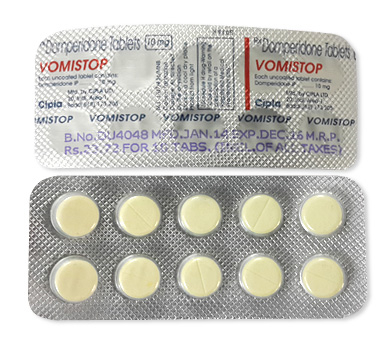
Motilium
- Motilium (domperidone) is available in Canada and other countries through pharmacies and licensed suppliers; however, it is prescription-only in most markets, including Canada, the UK, the EU, Australia, and Romania. It is not approved for regular over-the-counter sale due to cardiac safety concerns.
- Motilium is used to treat nausea and vomiting, symptoms of gastroparesis, and sometimes other gastrointestinal motility problems. It works as a dopamine D2 receptor antagonist and prokinetic agent, helping the stomach empty more efficiently and reducing nausea.
- The usual adult dose is 10 mg up to 3 times daily, depending on the condition. For children, dosing is typically 0.25 mg/kg up to 3 times daily, with specialist guidance when needed.
- The form of administration is usually a tablet; it is also available as an oral suspension and, in some markets, as orally disintegrating or film-coated tablets.
- The effect of Motilium usually begins within about 30 to 60 minutes after taking it.
- The duration of action is generally about 4 to 6 hours.
- Alcohol is not recommended, as it may worsen dizziness, drowsiness, and stomach irritation and can make side effects harder to manage.
- The most common side effects include headache, dry mouth, abdominal cramps, diarrhoea, drowsiness, and raised prolactin-related effects such as breast tenderness or menstrual changes.
- Would you like to try Motilium without a prescription?
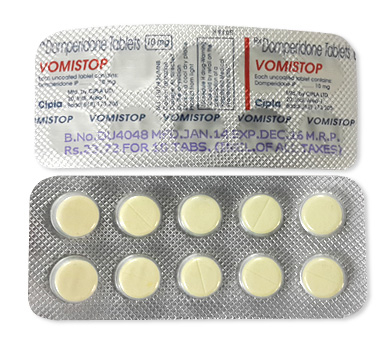
Basic Motilium Information
- INN (International Nonproprietary Name): Domperidone
- Brand names available in Canada (English): Motilium, Apo-Domperidone
- ATC Code: A03FA03
- Forms & dosages: Tablet 10 mg; oral suspension 1 mg/mL or 5 mg/5 mL; orally disintegrating tablets 10 mg in select markets; film-coated tablets 10 mg in common EU markets
- Manufacturers in Canada (English): Janssen Pharmaceutica; Mylan; Teva
- Registration status in Canada (English): Prescription required
- OTC / Rx classification: Prescription-only (Rx)
Everyday Use And Best Practices
Most people asking about motilium want a simple answer: when should it be taken during a normal day?
In Canadian routines, domperidone is usually taken before meals so it can support stomach emptying and help with nausea.
That often means before breakfast, before a late lunch on shift work, or before supper after a long school pickup line and a quick dinner at home.
Motilium is a prescription-only medicine in Canada, so it should be used exactly as directed on the label or by a pharmacist or physician.
If the label is bilingual, follow the English or French directions carefully and ask the pharmacist to explain any part that is unclear.
That applies whether the prescription was filled at Shoppers Drug Mart, Rexall, Jean Coutu, or London Drugs, because the product name, strength, and directions should still match the same medical instruction.
Many patients take domperidone tablets with a glass of water and then wait for the meal rather than changing the timing on their own.
Food examples are ordinary ones: coffee and toast, cereal, or a light supper can all fit the usual timing if the prescription says to take the dose before eating.
- Check the label for domperidone 10 mg and the exact dosing schedule.
- Take it before meals unless your prescriber or pharmacist says otherwise.
- Do not move doses around just because dinner is late or breakfast is skipped.
- Ask the pharmacy team if the timing differs from your usual Canadian routine.
Safety Priorities
Who should avoid Motilium, or at least get a careful review first?
Health Canada advisories and Canadian clinicians are cautious in people with prolonged QT interval, known arrhythmia, prolactinoma, severe liver disease, allergy to domperidone, or use of QT-prolonging medicines and strong CYP3A4 inhibitors.
Extra caution is also used in adults over 60 and in people with heart risk factors, because the cardiac risk matters more when other concerns are present.
Drowsiness, dizziness, and anxiety can happen, so driving, operating machinery, or doing safety-sensitive work should be approached carefully.
That risk can feel worse if the person is already dehydrated, vomiting a lot, or has low electrolytes.
- Palpitations or a racing heartbeat.
- Fainting or feeling close to fainting.
- Chest pain or chest pressure.
- Severe dizziness that does not settle.
- Shortness of breath or a new irregular pulse.
Dosage And Adjustments
What does a usual Motilium dose look like in Canada?
For nausea or vomiting, the common adult pattern is domperidone 10 mg up to three times daily, usually for short-term use of up to 7 days.
Canadian pharmacies dispense prescription products with a DIN, so it is smart to confirm the exact DIN, strength, and directions on the label before taking any dose.
For gastroparesis, the same adult pattern is often used, but the shortest effective duration is preferred and a review at about 4 weeks is typical.
Children often need oral suspension and weight-based dosing, while severe hepatic impairment is a contraindication and severe kidney disease calls for caution.
| Patient Group | Typical Pattern | Special Notes |
|---|---|---|
| Adults and adolescents 12+ | 10 mg up to 3 times daily | Short-term use is common for nausea and vomiting |
| Children | 0.25 mg/kg up to 3 times daily | Oral suspension is commonly used |
| Elderly | Lowest effective dose | Cardiac risk is higher |
| Severe liver disease | Not appropriate | Contraindicated |
- What is the DIN on the box or bottle?
- Is the product domperidone 10 mg tablets or oral suspension?
- Does age, liver disease, or kidney disease change the plan?
- Should this be used only for a few days, or longer with specialist review?
User Testimonials
What do Canadian patients usually notice first with Motilium?
People commonly report less nausea, a better appetite, fewer “stuck” stomach feelings, and easier day-to-day functioning.
That said, response varies, and not every person gets the same result from domperidone experiences shared online or in clinic.
Forum-style conversations on Reddit Canada and health boards often repeat a few themes.
- What people say helped: taking it before meals, asking a pharmacist about timing, and keeping doses consistent.
- What people found challenging: getting a prescription, understanding when to take it, and worrying about heart warnings.
Those kinds of Motilium reviews can be useful for context, but online anecdotes do not replace advice from a pharmacist or physician.
Buying Guide
Where do Canadians usually get Motilium, and how do they compare options?
Domperidone is prescription-only in Canada, so it is usually bought in-store or ordered through a local pharmacy rather than picked up over the counter.
That includes national chains, rural independents, and mail-order options for remote communities.
Bilingual labelling is common, and a pharmacist can confirm the DIN before the medication is used.
In our online pharmacy, Motilium is available without a prescription, with discreet delivery to Canada (English) in 5-14 days.
Prices can vary by province, drug plan coverage, and the patient’s benefit program, such as Ontario Drug Benefit, BC PharmaCare, or RAMQ in Quebec.
Cross-border comparisons are often confusing because domperidone is not generally FDA-approved for routine use in the U.S.
| Access Route | Typical Use | Coverage Notes |
|---|---|---|
| In-store pharmacy | Local pickup after a prescription | May be covered by a provincial plan or private insurance |
| Mail-order pharmacy | Useful for remote or repeat fills | Coverage depends on the plan and pharmacy network |
| Cross-border access | Not a routine Canadian option | U.S. rules are different and approval is limited |
What Is Inside And How It Works
What exactly is Motilium made of, and why does it help some people feel better?
The INN is domperidone, and in Canada the main brand names are Motilium and Apo-Domperidone, usually as 10 mg tablets.
Some markets also have oral suspension, but Canadian dispensing is commonly tablet-based for adults.
| Ingredient | Class | Main Action |
|---|---|---|
| Domperidone | Prokinetic and antiemetic | Helps the stomach move food along and can reduce nausea and vomiting |
One Canadian-relevant point matters here: domperidone does not easily cross the blood-brain barrier, so it has fewer central nervous system effects than metoclopramide.
Main Indications
Why would a Canadian prescriber choose Motilium in the first place?
The main approved practical uses are nausea and vomiting, and sometimes gastroparesis management.
It is prescription-only in Canada, and common stomach upset is usually treated for a short duration rather than as a long-term routine.
Some physicians also use it off-label for increased lactation, but that should only be considered under close supervision and it is not approved for children.
| Indication | Typical Adult Dose | Needs Specialist Advice? |
|---|---|---|
| Nausea and vomiting | 10 mg up to 3 times daily | Usually no, for short-term use |
| Gastroparesis | 10 mg up to 3 times daily | Yes, especially if symptoms persist |
| Increased lactation | Variable, off-label | Yes |
For patients comparing domperidone uses, the prescriber is usually deciding between symptom relief, stomach motility support, and safety factors like heart risk and other medicines.
Interaction Warnings
Can domperidone be taken with coffee, alcohol, or other medicines?
Alcohol may make dizziness or stomach upset worse, and caffeine can aggravate nausea in some people, so moderation is sensible.
Food timing is usually more important than strict meal rules, which is why taking it before meals is the usual plan.
The bigger issue is medication screening, because domperidone interactions can include QT-prolonging drugs and potent CYP3A4 inhibitors.
Canadians should ask a pharmacist to review all prescriptions, over-the-counter products, and supplements, especially if heart medicines or antibiotics are being used.
- Prescription heart medicines.
- Antibiotics that affect heart rhythm.
- Antifungals or other strong CYP3A4 inhibitors.
- Any product that may prolong the QT interval.
Latest Evidence And Insights
What does the research story say about Motilium today?
Canadian and international evidence supports domperidone for nausea and gastric motility problems, but cardiac safety scrutiny remains ongoing.
That benefit-risk balance is a big reason it stays prescription-only in Canada and is not treated as a casual OTC option.
| Evidence Theme | What Research Supports | Practical Takeaway For Canadians |
|---|---|---|
| Effectiveness | Helps with nausea and stomach motility | Can be useful when symptoms fit the medicine |
| Safety | Cardiac risk needs attention | Use the lowest effective dose for the shortest time |
| Higher-risk groups | Older age and higher doses increase risk | Extra caution is needed in adults over 60 |
| Long-term use | Should not be routine without review | Specialist follow-up matters |
For many patients, the simplest evidence-based plan is to use it only when clearly needed, review the duration, and keep the dose as low as possible.
Alternative Choices
What if Motilium is not the best fit?
Common domperidone alternatives include metoclopramide, sold as Reglan in some markets, and ondansetron, known as Zofran.
Domperidone may cause fewer central nervous system effects than metoclopramide, while ondansetron is often used for nausea but works differently.
| Medicine | Pros | Cons |
|---|---|---|
| Motilium | Good for nausea and stomach motility; fewer CNS effects | Cardiac safety concerns and prescription restrictions |
| Metoclopramide / Reglan | Can help nausea and motility | More central side effects for some people |
| Zofran | Often used for nausea | Works differently and may not help motility the same way |
- Ask your doctor or pharmacist if your main issue is nausea, vomiting, or slow stomach emptying.
- Ask if heart risk, age, dehydration, or other medicines change the best choice.
- Ask whether a short course or specialist review is the safer plan.
Regulation Snapshot
How is domperidone regulated in Canada and elsewhere?
Health Canada domperidone rules treat it as prescription-only, and the package should carry a valid DIN.
Patients can verify the medicine with a pharmacist, and the Canadian rules reflect cardiac safety concerns.
Provincial coverage and access can differ quite a bit, especially between urban chain pharmacies and rural locations with local pharmacy or delivery service support.
| Province Or Plan | Coverage Notes | Access Notes |
|---|---|---|
| Ontario Drug Benefit | May require plan-specific review | Widely accessible through urban and community pharmacies |
| BC PharmaCare | Coverage depends on plan rules | Chain and independent pharmacies both play a role |
| RAMQ in Quebec | May involve specific coverage conditions | French and bilingual pharmacy labels are common |
Frequently Asked Questions
How fast does Motilium start working?
Some people notice relief fairly quickly, but the exact timing varies by symptom and dose.
Can I take it with other nausea medicines?
Maybe, but only after a pharmacist checks for interactions and QT risk.
What if I miss a dose?
Take it when remembered unless it is almost time for the next dose, and never double up.
Is it safe with my heart medication?
That depends on the exact medicine, so a pharmacist review is the safest next step.
Guidelines For Proper Use
What are the practical rules Canadian patients should follow every day?
Use the lowest effective dose, keep treatment short unless supervised, and avoid long-term use without review.
Pharmacists can help with timing, interactions, and provincial coverage questions, which is often where patients get the clearest advice.
Storage matters too, since domperidone should be kept below 25°C and protected from moisture and light.
Missed-dose advice is straightforward: take it when remembered unless it is almost time for the next dose, and never double up.
- Store below 25°C.
- Keep the package dry and out of light.
- Follow the label timing before meals.
- Do not double a missed dose.
- Seek urgent help for fainting, palpitations, severe rash, or allergic symptoms.
Delivery Across Canada (English)
| City | Region | Delivery time |
|---|---|---|
| Toronto | Ontario | 5-7 days |
| Ottawa | Ontario | 5-7 days |
| Montreal | Quebec | 5-7 days |
| Quebec City | Quebec | 5-7 days |
| Vancouver | British Columbia | 5-7 days |
| Victoria | British Columbia | 5-7 days |
| Calgary | Alberta | 5-7 days |
| Edmonton | Alberta | 5-7 days |
| Winnipeg | Manitoba | 5-7 days |
| Halifax | Nova Scotia | 5-7 days |
| Regina | Saskatchewan | 5-9 days |
| Saskatoon | Saskatchewan | 5-9 days |
| St. John’s | Newfoundland and Labrador | 5-9 days |
| Charlottetown | Prince Edward Island | 5-9 days |
Quick Takeaway For Canadian Patients
Motilium can be helpful when nausea or slow stomach emptying is the real problem, but it is not a casual medicine.
In Canada, the safest approach is to follow the prescription exactly, check for interactions, and keep an eye on heart-related warning signs.
When the timing, dose, and review plan are clear, domperidone can fit into everyday routines without a lot of confusion.